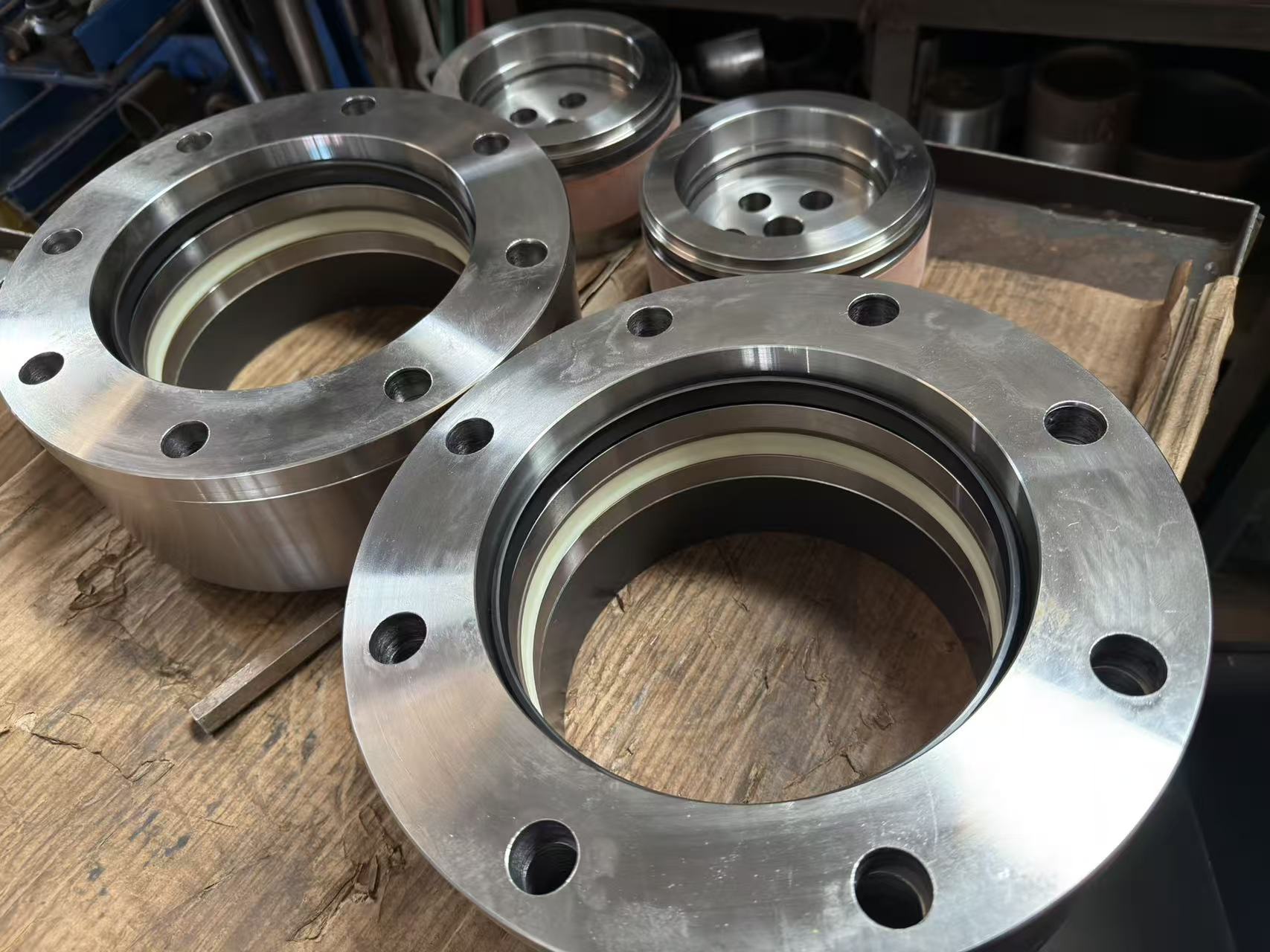
In the precise world of fluid power manufacturing, the hydraulic cylinder gland is often the unsung hero of the system. Also known as the cylinder head or “stuffing box,” this component is critical for sealing the rod end of the barrel and preventing leaks.
Whether you are sourcing hydraulic cylinder components for a new manufacturing line or looking for replacement parts for heavy equipment, understanding the design differences is essential. This guide covers the anatomy of a cylinder gland, the distinct types available, and how to choose the right one for your application.
Introduction to Hydraulic Cylinder Glands
A cylinder gland serves two primary functions: it acts as a physical stopper to close the end of the cylinder barrel, and it serves as a housing for the rod seals and wipers.
While the “blind end” (cap end) of a cylinder is often welded or fixed, the gland end must be removable to allow for maintenance of the internal rod and piston. This requirement for removability, combined with the need to withstand immense hydraulic pressure, has led to the engineering of several distinct gland retention methods.
Understanding Hydraulic Cylinder End Cap Types
Before diving into the specific gland retention styles, it is important to understand the broader category of hydraulic cylinder end cap types.
Purpose of End Caps
End caps are the structural bookends of the cylinder. While the rear cap connects the cylinder to the machinery, the front end cap—the gland—manages the interaction between the moving rod and the stationary barrel. It must contain the high-pressure hydraulic oil and prevent external contaminants from entering the system.
Common Types of End Caps
In the industry, terms like “head,” “gland,” and “end cap” are often used interchangeably for the rod end. However, designs vary significantly based on pressure ratings (PSI) and application—ranging from simple screw-on caps for light-duty use to heavy-duty flanged glands for industrial presses.
Overview of Cylinder Gland Types
Based on manufacturing standards and retention methods, here are the top 5 hydraulic cylinder gland types you will encounter.
Standard Gland Types
1. Threaded Glands
The threaded gland is the most common design found in mobile hydraulics (like excavators and loaders). The gland body has external threads and screws directly into the cylinder barrel.
- Best for: Compact applications where space is limited.
- Pros: High pressure capability and a streamlined profile.
2. Wire Ring (Round Lock Wire) Glands
This design uses a flexible wire inserted through a slot in the barrel to lock the gland in place. To remove it, the gland is rotated to “feed” the wire out.
- Best for: situations requiring a smooth outer barrel surface.
- Pros: Very compact; no external bolts or threads to get damaged.
Specialty Gland Types
3. Bolted Flange Glands
Common in industrial “mill-type” cylinders, a flange is welded to the barrel, and the gland is bolted to that flange.
- Best for: Heavy-duty industrial applications.
- Pros: Extremely strong and the easiest to service.
4. Tie-Rod Glands
Exclusive to tie-rod cylinders, this gland is held in place by long rods that run the length of the cylinder, sandwiching the barrel between the head and cap.
- Best for: Factory automation and standard NFPA industrial applications.
- Pros: Modular and easy to assemble.
5. Internal Retaining Ring (Snap Ring) Glands
Often used in lighter-duty applications. The gland slides into the barrel and is secured by a heavy-duty snap ring seated in a groove.
- Best for: Light-duty hydraulic or pneumatic applications.
- Pros: Cost-effective and fast to manufacture.
Key Components of Hydraulic Cylinder Glands
Regardless of the external shape, the internal machining of a gland determines its performance. It houses several critical hydraulic seals.
Hydraulic Oil Interaction
The gland is the final barrier against leaks. The material (often Ductile Iron or Aluminum) must be compatible with the hydraulic oil to prevent corrosion or chemical breakdown.
O-Rings and Their Function
O-rings are typically located on the outer diameter (OD) of the gland. They create a static seal between the gland and the cylinder barrel wall to ensure no oil bypasses the threads or retention mechanism.
Rod Seals and Piston Seals
It is vital to distinguish between these seal types:
- Rod Seals: Located inside the gland. They seal against the moving rod to keep oil inside.
- Piston Seals: Located on the piston deep inside the barrel (not in the gland itself).
Wear Rings
Also known as guide bands, wear rings are inserted into the gland to support the rod. They prevent metal-on-metal contact between the steel rod and the gland, absorbing side-load forces and extending the life of the seal package.
Choosing the Right Gland for Your Application
Factors to Consider
When selecting a replacement gland or designing a new cylinder:
- Pressure Rating: Threaded and bolted glands offer higher safety margins for high-pressure systems (3000+ PSI).
- Serviceability: If you perform frequent seal changes, bolted flanges are much easier to remove than corroded threaded glands.
- Environment: In corrosive environments, wire ring glands can seize, making removal nearly impossible without destroying the barrel.
Compatibility with Pneumatic Cylinders
While pneumatic cylinders (air-powered) may look similar to hydraulic ones, their glands are distinct. Pneumatic glands are often made of aluminum and use different seal compounds because air does not provide the same lubrication as hydraulic fluid. Always verify compatibility before swapping components.
Conclusion
Summary of Gland Types
From the robust threaded gland to the accessible bolted flange, the hydraulic cylinder gland is a sophisticated component engineered for safety and efficiency. Identifying the correct type is the first step in successful maintenance.
Are you struggling to identify a specific gland or need a custom manufacturing solution? Contact our expert team today to find the exact hydraulic cylinder gland and seal kits you need to keep your equipment running.
Related Categories: 未分类, SEIGO